
“You Gotta Believe” Tribute: https://youtu.be/d1c6045n7v4
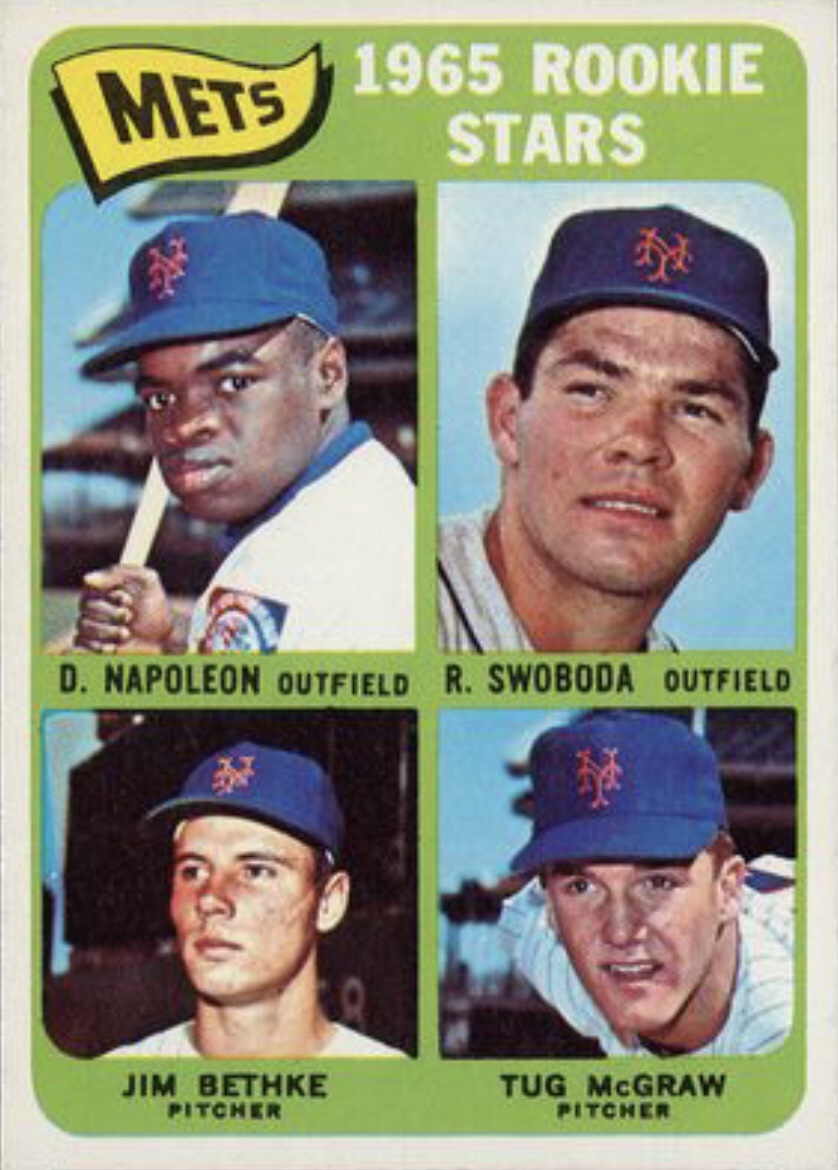
Frank Edwin “Tug” McGraw, Jr. (August 30, 1944 – January 5, 2004) was born in Martinez, California, and raised in the Bay Area. After playing baseball through high school and junior college, McGraw signed an amateur free agent contract with the New York Mets in 1964. He spent one season in the farm system, before making the big league club out of spring training in 1965. After having some success in ’65, McGraw struggled the following season. He was sent back to the minor leagues after four games in the 1967, where he played for the Jacksonville Suns for the remainder of ’67, and all of 1968. Tug McGraw returned to the major league club in 1969, and from his position in the bullpen was an excellent accompaniment to a young Mets rotation that included Nolan Ryan, Tom Seaver and Jerry Koosman. The Mets finished the season in first place, and moved through the playoffs. McGraw saw only limited action in the postseason, but had front row seats for the Amazing Mets’ World Series victory over the Baltimore Orioles. The lefty developed into one of the league’s premier relief pitchers in the early 1970s, and made his first all-star appearance in 1972. The following year he took a leadership role on the team. McGraw is credited with first using, and then continually reinforcing “Ya Gotta Believe,” as a rally cry for the 1973 Mets. The phrase took hold, and became a saying that popularized the team. After being in last place on August 30, the Mets rallied to clinch the division crown on the final day of the season. They defeated the Cincinnati Reds in the NLCS, before ultimately losing to the Oakland A’s in a World Series that went the full seven games. McGraw pitched well throughout the playoffs, making two appearances in the NLCS, and five in the World Series. The Mets traded Tug McGraw to the Philadelphia Phillies after the 1974 season. The Phillies built a strong veteran-based squad over the next several years, and in 1980 won the NL Eastern Division title in the last game of the season on their way to defeating the Houston Astros in the NLCS. They then defeated the Kansas City Royals in a World Series that lasted six games. McGraw appeared in four-of-six World Series games, striking out 10 batters in 7.2 innings. He struck out Willie Wilson with the bases loaded in the ninth inning to end the game and clinch the series for Philadelphia. Tug McGraw played four more seasons in Philadelphia, although the amount of action that he saw dwindled significantly. He retired after the 1984 season, having spent 19 years in the major leagues, twice being named to the National League All-Star team, and winning two World Series championships. Tug McGraw is the father of country singer, Tim McGraw, the result of a brief relationship with the singer’s mother. Though the two were estranged during Tim’s childhood, they developed a close relationship later. He was working as an instructor at Phillies spring training when McGraw was hospitalized with a brain tumor. Surgery ensued, from which the original prognosis was good. However, the tumor returned in an inoperable form, and McGraw passed away on January 5, 2004. Tim McGraw’s hit, “Live Like You Were Dying,” was recorded in Tug’s honor.
Card also highlights: D. Napoleon, R. Swaboda, and J. Bethke.
 High Quality Baseball Cards