
1994 Hall of Fame Speech: https://youtu.be/mO1cIH1EszQ
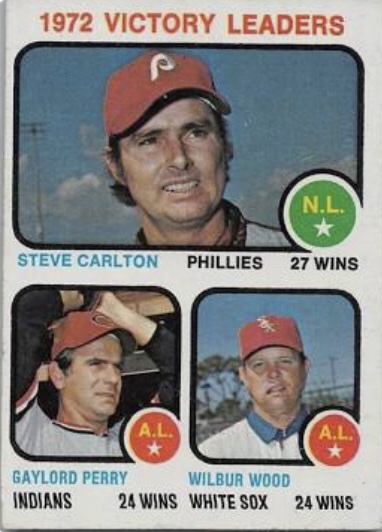
Steven Norman Carlton (born in Miami, FL on December 22, 1944) is an American former professional baseball player. He played in Major League Baseball as a left-handed pitcher for six different teams from 1965 to 1988, most notably as a member of the Philadelphia Phillies with whom he won four Cy Young Awards as well as the 1980 World Series. He was elected to the Baseball Hall of Fame in 1994. Nicknamed “Lefty”, Carlton has the second-most lifetime strikeouts of any left-handed pitcher (4th overall), and the second-most lifetime wins of any left-handed pitcher (11th overall). He was the first pitcher to win four Cy Young Awards in a career. He held the lifetime strikeout record several times between 1982 and 1984, before his contemporary Nolan Ryan passed him. One of his most remarkable records was accounting for nearly half (46%) of his team’s wins, when he won 27 games for the last-place (59–97) 1972 Phillies. He is the last National League pitcher to win 25 or more games in one season, as well as the last pitcher from any team to throw more than 300 innings in a season. He also holds the record with the most career balks of any pitcher, with 90 (double the second on the all-time list, Bob Welch). Carlton debuted with the St. Louis Cardinals as a 20–year-old in 1965 and by 1967 was a regular in the Cardinals rotation. An imposing man (6 feet 4 inches (1.93 m)) with a hard fastball and slider, Carlton was soon known as an intimidating and dominant pitcher. Carlton enjoyed immediate success in St. Louis, posting winning records and reaching the World Seriesin 1967 and 1968. In 1967, Carlton was 14–9 with a 2.98 ERA in 28 starts. In 1968, he was 13–11 with a 2.99 ERA. On September 15, 1969, Carlton struck out 19 New York Mets, while losing to the Mets, 4–3, setting the modern-day record at that time for strikeouts in a nine-inning game. He finished 1969 with a 17–11 record, a 2.17 ERA, second-lowest in the NL, and 210 strikeouts. In the 1967 World Series, Carlton started Game 5 and pitched 6 strong innings, giving up only an unearned run, but taking a 3–1 loss. The Cardinals beat the Boston Red Sox to capture the World Series. In the 1968 World Series, Carlton pitched in two games in relief, giving up three runs over four innings as the Cardinals lost to the Detroit Tigers in seven games. A contract dispute with the Cardinals (he had made $26,000 in 1969 and was holding out for $50,000, as opposed to the Cardinals’ contract offer for $31,000) made Carlton a no-show at spring training in 1970. He proceeded to go 10–19 with a 3.73 ERA, leading the NL in losses. In 1971, Carlton rebounded in 1971, going 20–9 with a 3.56 ERA, his first of six 20–win seasons. Following another salary dispute, Cardinals owner Gussie Busch ordered Carlton traded. The Cardinals were offering $55,000 and Carlton wanted $10,000 more. He was traded to the Philadelphia Phillies on February 26, 1972, just before the 1972 season for pitcher Rick Wise. The trade is now considered one of the most lopsided deals in baseball history. However, at the time, the trade appeared to make sense from the Cardinals’ perspective. Carlton had won 77 games to Wise’s 75, and both were considered among the game’s best pitchers. Tim McCarver, who had caught for Carlton in St. Louis and for Wise in Philadelphia (and who would later become Carlton’s personal catcher again with the Phillies), described the trade at the time as “a real good one for a real good one.” He felt Carlton had more raw talent, but Wise had better command on the mound. Wise pitched in the majors for another 11 years (he pitched two seasons with the Cardinals before being traded to Boston), and the trade is reckoned as an epoch-making deal for the Phillies, as well as one of the worst trades in Cardinals history. Carlton was 77–62 with a 3.10 ERA in 190 games and 172 starts with the Cardinals over parts of seven seasons, with 66 complete games and 16 shutouts. He was selected to the NL All-Star team in 1968, 1969 and 1971.
Legend Pitcher: https://youtu.be/EXjTfrNTBhc
Gaylord Jackson Perry (born in Williamston, NC on September 15, 1938) is an American former professional baseball player. He played in Major League Baseball as a right-handed pitcher for eight different teams from 1962 to 1983. During a 22-year baseball career, Perry compiled 314 wins, 3,534 strikeouts, and a 3.11 earned run average. He was elected to the Baseball Hall of Fame in his third year of eligibility in 1991. Perry, a five-time All-Star, was the first pitcher to win the Cy Young Award in each league, winning it in the American League in 1972 with the Cleveland Indians and in the National League in 1978 with the San Diego Padres. He is also distinguished, along with his brother Jim Perry, for being part of the second-winningest brother combination in baseball history—second only to the knuckleball throwing brothers, Phil Niekro and Joe Niekro. While pitching for the Seattle Mariners in 1982, Perry became the 15th member of the 300 win club. Despite Perry’s notoriety for doctoring baseballs (e.g. throwing a spitball), and perhaps even more so for making batters think he was throwing them on a regular basis – he even went so far as to title his 1974 autobiography Me and the Spitter – he was not ejected for the illegal practice until August 23, 1982, in his 21st season in the majors.
How Good of a Pitcher was Wilbur in 1972? https://youtu.be/OD8-XkeUvB8
In a 17-year major league career, Wilbur Wood (Born in Cambridge, MA on October 22, 1941) compiled a 164–156 record with a 3.24 ERA in 661 games. He had 1,411 strikeouts in 2,684 innings pitched, completing 114 games (24 of which were shutouts) of his 297 games started. Wood started 70 games on two days’ rest, the highest total since 1914 with the exception of Grover Cleveland Alexander, who did so 72 times in that period. At the plate, Wood posted a .084 batting average (27 hits in 322 at bats) with only two extra-base hits (both doubles) and just 13 RBI. As a fielder, he recorded a .977 fielding percentage. First eligible for the Hall of Fame in 1984, Wood received votes for six years. His best year was 1988, when he garnered seven percent of the vote. After receiving just 3.1% of the vote in 1989, he became ineligible to appear on further ballots, as players must receive at least five percent each year to remain potential selections.
 High Quality Baseball Cards