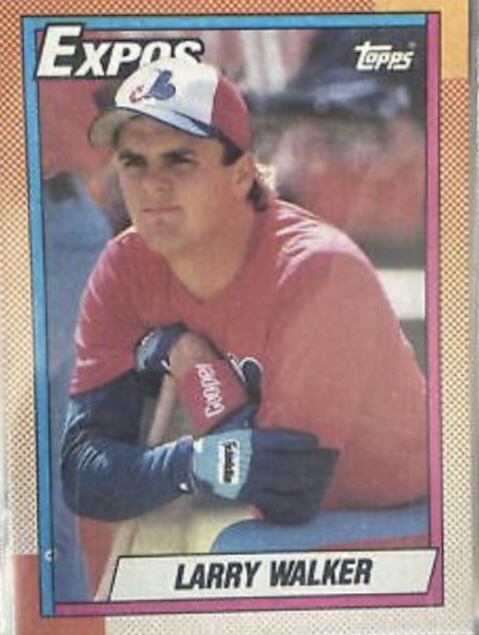
Larry Kenneth Robert Walker (born December 1, 1966) is a Canadian former professional baseball right fielder. During his 17-year Major League Baseball (MLB) career, he played with the Montreal Expos, Colorado Rockies, and St. Louis Cardinals. In 1997, he became the only player in major league history to register both a .700 slugging percentage (SLG) and 30 stolen bases in the same season, on his way to winning the National League (NL) Most Valuable Player Award (MVP). The first player in more than 60 years to record a batting average of .360 in three consecutive seasons from 1997 to 1999, Walker also won three NL batting championships. He was inducted into Canada’s Sports Hall of Fame in 2007, and the Canadian Baseball Hall of Fame in the Class of 2009, and was named the 13th-greatest sporting figure from Canada by Sports Illustrated in 1999. In 2020, he was elected to the Baseball Hall of Fame, becoming the first member of the Hall to be depicted in a Rockies uniform on his plaque. Widely considered a five-tool talent of prodigious athleticism and instincts, Walker hit for both average and power, combined with well-above-average speed, defense and throwing strength and accuracy. He was recognized as the top Canadian athlete in 1998 with the Lou Marsh Trophy. Other honors include five MLB All-Star selections, seven Gold Glove Awards, three Silver Slugger Awards, and nine Tip O’Neill Awards. His career SLG of .565 ranks 12th all time. Walker is one of only 19 hitters in history to accomplish a .300 batting average, .400 on-base percentage (OBP), and .500 SLG with at least 5,000 plate appearances, and one of six whose careers began after 1960. Considering advanced metrics, he is one of only three players in history to rank within the top 100 of each of batting runs, base-running runs, and defensive runs saved; the others are Barry Bonds and Willie Mays. Raised in the Greater Vancouver area of British Columbia, Walker spent his youth playing street hockey with consuming NHL goaltender aspirations. That dream never materialized; however, the Expos saw his baseball potential and signed him in 1984. By 1990, Walker became their starting right fielder, propelling them to the majors’ best record in 1994 when that year’s strike stopped their first serious World Series run. He signed with the Rockies as a free agent following the season, and, during a six-year period starting in 1997, was the major league batting leader three times while finishing second in the NL twice. In 1997, he also led the league in home runs, OBP, and SLG, while joining the 30–30 club, registering 12 outfield assists and leading his position with four double plays turned; he won the NL MVP Award that year. Desiring a trade to a contending team, Walker was sent by the Rockies to St. Louis in the middle of their 105-win season of 2004 where he made his first World Seriesappearance while tying or setting three Cardinals postseason records. He announced his retirement from playing baseball after Game 6 of the 2005 National League Championship Series. Following his playing career, Walker has served as a guest instructor for the Cardinals, and, since 2009, has coached the Canadian national team. In that time, Team Canada has competed in three World Baseball Classic (WBC) tournaments, and twice at the Pan American Games, winning consecutive gold medals in 2011 and 2015.
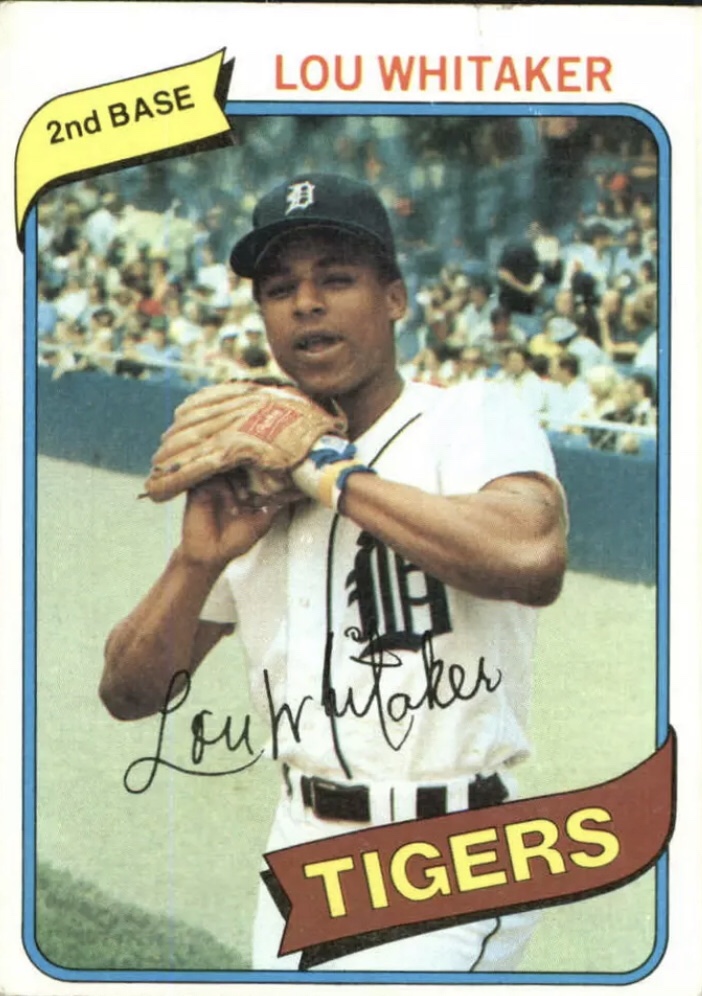
Louis Rodman Whitaker Jr. (born in Brooklyn, NY on May 12, 1957), nicknamed “Sweet Lou“, is an American former professional baseball second basemanwho played for the Detroit Tigers of Major League Baseball (MLB) from 1977 to 1995. He won the American League Rookie of the Year Award in 1978, and was a five-time MLB All-Star in his career. He won four Silver Slugger Awards and three Gold Glove Awards. Whitaker and teammate Alan Trammell comprised the longest running double play combination in MLB history (19 seasons). The Detroit Tigers selected Whitaker in the fifth round, with the 99th overall selection, of the 1975 MLB draft. He signed with the Tigers rather than attend college. He made his professional debut that year for the Bristol Tigers of the Rookie-level Appalachian League. He played for the Lakeland Tigers of the Class A Florida State League in 1976. The team’s starting third baseman, he batted .297 and was named the league’s most valuable player. After the 1976 season, the Tigers assigned Whitaker to the Arizona Instructional League, where they converted him into a second baseman and paired him with shortstop Alan Trammell. In 1977, they both played for the Montgomery Rebels of the Double-A Southern League, Whitaker batting .280 during the season. The two were both promoted to the Major Leagues late in the 1977 season and had become starters for the Tigers by the end of April 1978. They would remain teammates until Whitaker retired in 1995. In 1978, Whitaker won the American League Rookie of the Year Award, hitting .285 with 71 runs, 20 stolen bases and a .361 on-base percentage. After hitting no more than five home runs in any of his first four seasons, Whitaker began to find his power stroke in 1982, with 15 round-trippers. Whitaker enjoyed a strong season in 1983, hitting for a .320 average with 206 hits, 12 home runs, 72 runs batted in (RBI), 94 runs, and a .380 on-base percentage. That year he made the first of five consecutive All-Star appearances, won the first of his three Gold Glove awards, and earned the first of his four Silver Slugger awards at second base. He finished eighth in the 1983 AL MVP Award voting. Trammell and Whitaker also made a cameo appearance as themselves on the television show Magnum, P.I., starring Tom Selleck, during the 1983 season. Selleck’s character was a Tigers fan, as is Selleck himself. In 1984, Whitaker contributed a .289 batting average, 13 home runs, and another Gold Glove season as the Tigers ran away with the AL East Division and eventually won the World Series. Whitaker hit .278 in the Series with a .409 on-base percentage, scoring six runs in the five games. The day Detroit clinched the Series, the second eldest of Whitaker’s four daughters was born. In 1985, Whitaker set a record for Detroit second basemen with 21 home runs, while topping 100 runs scored for the first time in his career (102). In 1986, he was a member of a Tigers infield in which all four members (Whitaker, Darrell Evans, Alan Trammell and Darnell Coles) hit at least twenty home runs. In 1987, he scored a career-high 110 runs and won his final Silver Slugger award at second base as the Tigers edged out the Toronto Blue Jays on the final day of the regular season to win the AL East Division title. Whitaker reached career highs with 28 homers and 85 RBI in 1989, one of four times he reached the 20-HR plateau, upping his record for the most homers in a season by a Tiger second baseman. Whitaker now shares the season record with Ian Kinsler, who hit 28 homers in 2016 as the Tigers regular second baseman.
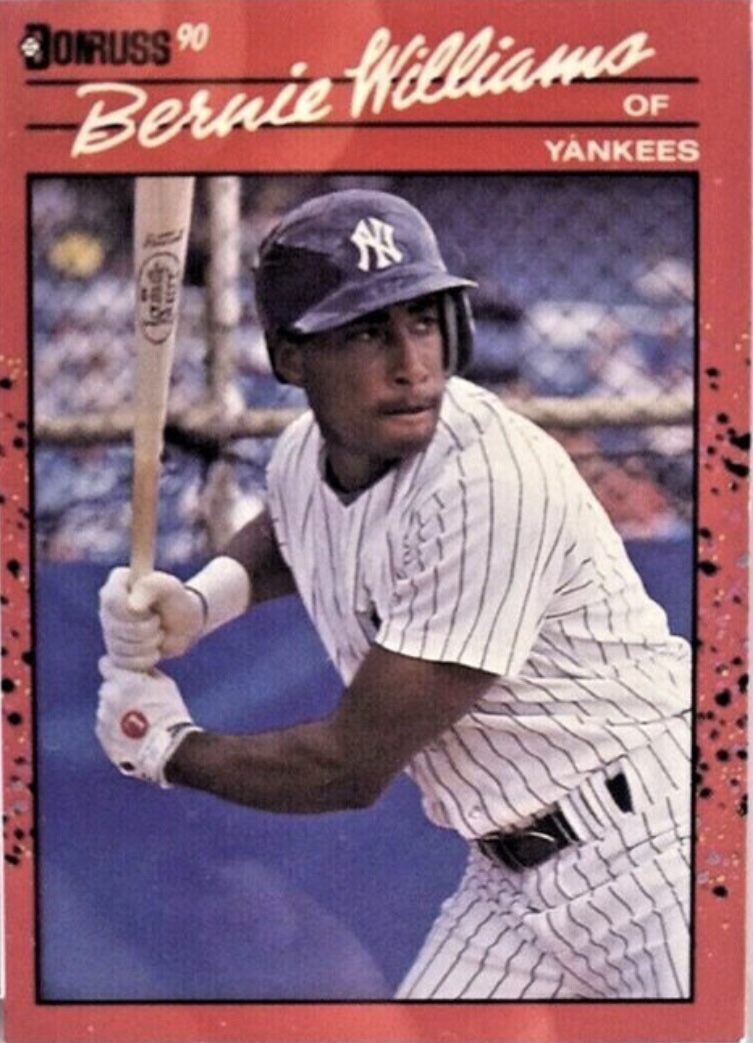
Bernabé Williams Figueroa Jr. (born in San Juan, PR on September 13, 1968) is a Puerto Rican former professional baseball player and musician. He played his entire 16-year career in Major League Baseball (MLB) with the New York Yankees from 1991 through 2006. A center fielder, Williams was a member of four World Series championship teams with the Yankees. He ended his career with a .297 batting average, 287 home runs, 1,257 runs batted in (RBI), 1,366 runs scored, 449 doubles, and a .990 fielding percentage. He was a five-time All-Star and won four Gold Glove Awards, a Silver Slugger Award, the American League (AL) batting title in 1998, and the 1996 AL Championship Series Most Valuable Player Award. Known for his consistency and postseason heroics, Williams is one of the most beloved Yankees. The team honored him by retiring his uniform number 51and dedicating a plaque to him in Monument Park in May 2015. Williams is widely regarded as one of the greatest switch-hitting center fielders in history. Williams is also a classically trained guitarist. Following his retirement from baseball, he has released two jazz albums. He was nominated for a Latin Grammy in 2009. In 1985, Roberto Rivera, a scout for the New York Yankees of Major League Baseball (MLB), discovered Williams and Williams’ friend, Juan González. Though Rivera was not interested in González, who he perceived as not taking the game seriously, he wanted to sign Williams. However, Williams was a few months shy of his 17th birthday, when he would become eligible to sign with an MLB team. The Yankees put Williams in a training camp in Connecticut near the home of scouting director Doug Melvin. After playing a few games in the Greater Hartford Twilight Baseball League on the Katz Sports Shop team, the Yankees officially signed Williams on his 17th birthday. While playing in minor league baseball, Williams took a course on biology at the University of Puerto Rico, and considered undertaking a pre-medical track as an undergraduate student. Deciding that he could not excel at baseball and medicine at the same time, Williams decided to focus on baseball. Playing for the Yankees’ Double-A team in Albany, he continued to develop his athletic skills – particularly as a switch hitter. Although viewed as a great prospect by Yankee management, his rise to the Majors was delayed by the solid outfield — Roberto Kelly, Danny Tartabull, and Jesse Barfield — that the team had developed in the early 1990s. Williams managed to break into the majors in 1991 to replace the injured Roberto Kelly for the second half of that season. He batted .238 in 320 at bats. He was demoted to the minors until Danny Tartabull was injured, and Williams earned his stay at center by putting up solid numbers. Williams had become the regular Yankees center fielder by 1993. However, Williams got off to a slow start that season, and Yankees’ owner George Steinbrenner, impatient with Williams, insisted that Gene Michael, the team’s general manager, trade him. Michael discussed trading Williams for Larry Walker with the Montreal Expos, but did not make the trade. In his first full season with the Yankees, Williams had a .268 batting average. Throughout the early 1990s, Williams hit in the middle of the order as management tried to figure out where his best fit was. Manager Buck Showalter helped keep Williams with the Yankees through 1995, when Steinbrenner became frustrated by the team’s difficulty in placing Williams in any of the traditional baseball player molds. He had good speed, but rarely stole bases. In center, he was highly capable at tracking down fly balls and line drives, but had a weak throwing arm. He was a consistent hitter but only had mild home run power. In 1995, Steinbrenner again considered trading Williams, this time to the San Francisco Giants for Darren Lewis. The Yankees kept Williams, who went on to have a breakout season. He hit 18 home runs and led the team in runs, hits, total bases and stolen bases. Williams continued his hot hitting into the postseason, leading the Yankees with a .429 batting average in the 1995 American League Division Series (ALDS) against the Seattle Mariners. After continuing to improve in 1996, Williams again showcased his skills to the baseball world in the postseason. He batted .467 in the ALDS against Texas and played a sparkling center field. He picked up where he left off in the ALCS against Baltimore, belting an 11th-inning walk-off homer in Game 1. Ending with a .474 ALCS average and two homers, he was named the ALCS MVP. Williams collected just four hits in the 1996 World Series but his clutch homer in the eighth inning of Game 3 helped spark the team’s comeback from a 2-0 series deficit to capture the team’s first championship since 1978. Despite his success, following the 1997 season, Williams again was the subject of trade rumors, this time involving the Detroit Tigers. According to The New York Times sportswriter Murray Chass, Williams was nearly dealt to the Tigers for a package of young pitchers including Roberto Durán and first round draft pick Mike Drumright. Tigers general manager Randy Smith believed a deal had been reached and an official announcement was close, but Yankees general manager Bob Watson denied that was the case, and Williams remained a Yankee. Watson also discussed Williams with the Chicago Cubs in a potential trade involving Lance Johnson. During the 1998 season, in which the Yankees went 114–48 to set a then-American League regular-season record, Williams finished with a .339 average, becoming the first player to win a batting title, Gold Glove award, and World Series ring in the same year.
David Mark Winfield (Born in St. Paul, MN on October 3, 1951-) is the only athlete to be drafted into three professional sports by the San Diego Padres, the Atlanta Hawks (NBA) and Utah Stars (ABA) and the Minnesota Vikings (NFL). Winfield was one of the greatest all-around athletes in the history of professional sports. Playing primarily for the San Diego Padres (1973-1980) and New York Yankees (1981-1990), though spending time with four other franchises (Angels, Blue Jays, Twins, Indians), Winfield never spent a day in the minor leagues and earned twelve All-Star selections, seven Gold Gloves and six Silver Slugger Awards in his 23-year career. Winfield’s combination of speed, power, durability and fielding ability placed him among the best in the game for two decades. Winfield helped guide the Toronto Blue Jays to their first World Series title in 1992. Dave Winfield retired posting a .283 career batting average with 3,110 hits, 1,669 runs, 223 stolen bases, 1,833 RBI and 465 home runs. David Mark Winfield was elected to the National Baseball Hall of Fame in 2001.
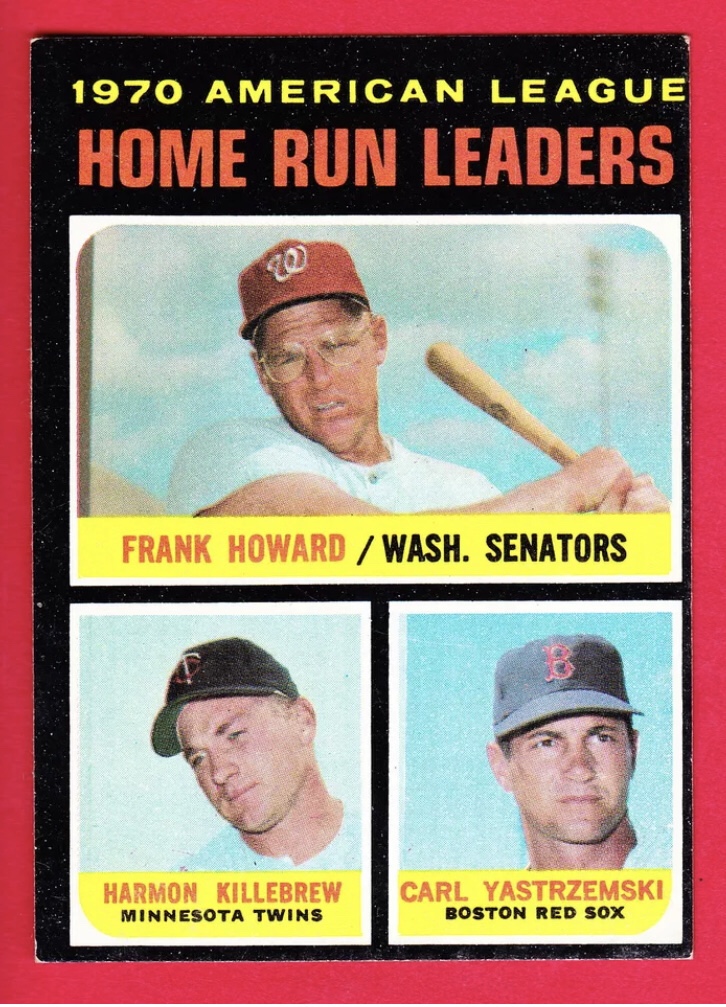
This card features Carl Yastrzemski along with Frank Howard and Harmon Killebrew.
Carl Yastrzemski (born August 22, 1939) is an American former Major League Baseballplayer. He was elected to the Baseball Hall of Fame in 1989. Yastrzemski played his entire 23-year Major League career with the Boston Red Sox (1961–1983). He was primarily a left fielder, but also played 33 games as a third baseman and mostly was a first baseman and designated hitter later in his career.[3]Yastrzemski is an 18-time All-Star, the possessor of seven Gold Gloves, a member of the 3,000 hit club, and the first American League player in that club to also accumulate over 400 home runs. He is second on the all-time list for games played, and third for total at-bats. He is the Red Sox’ all-time leader in career RBIs, runs, hits, singles, doubles, total bases, and games played, and is third on the team’s list for home runs, behind Ted Williams and David Ortiz.
One of the most physically intimidating players in baseball, the 6 ft 7 in Frank Howard would typically tip the scales at between 275 and 290 pounds, according to former Senators/Rangers trainer Bill Zeigler. Howard was named the National League’s Rookie of the Year in 1960, and went on to twice lead the American Leaguein home runs and total bases and in slugging percentage, runs batted in and walks once each. His 382 career home runs were the eighth most by a right-handed hitter when he retired; his 237 home runs and 1969 totals of 48 home runs and 340 total bases in a Washington uniform are a record for any of that city’s several franchises. Howard’s Washington/Texas franchise records of 1,172 games, 4,120 at bats, 246 home runs, 1,141 hits, 701 RBI, 544 runs, 155 doubles, 2,074 total bases and a .503 slugging percentage have since been broken.
Harmon Killebrew (June 29, 1936 – May 17, 2011), nicknamed “Hammerin’ Harmon”, was an American professional baseballfirst baseman, third baseman, and left fielder. He was a prolific power hitter who spent most of his 22-year career in Major League Baseball with the Minnesota Twins. At the time of his retirement Killebrew had the fifth-most home runs in major league history. He was second only to Babe Ruth in American League (AL) home runs, and was the AL career leader in home runs by a right-handed batter. Killebrew was inducted into the National Baseball Hall of Fame in 1984.
Robin Yount 1979 Topps #316 – Value: $1,000.00 – Grade: Mint
Robin R. Yount (nicknamed,“The Kid”, and “Rockin’ Robin“, born September 16, 1955) is an American former professional baseball player. He spent his entire 20-year career in Major League Baseball as a shortstop and center fielder for the Milwaukee Brewers (1974–93). Yount was drafted in 1973 and advanced to the major leagues one year later at the age of 18. He won two American League Most Valuable Player awards. In 1982, he led the Brewers to a World Series appearance. Yount was elected to the Baseball Hall of Fame in 1999 in his first year of eligibility. Since his retirement as a player, he has held several roles as a baseball coach.
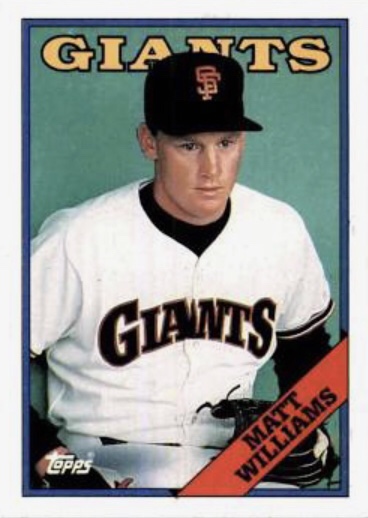
Matthew Derrick Williams (born in Geneva, AL on November 28, 1965), nicknamed “Matt the Bat” and “The Big Marine” is an American professional baseball manager and former third baseman who is the manager for the Kia Tigers of the KBO League.[1] A right-handed batter, Williams played in Major League Baseball for the San Francisco Giants, Cleveland Indians, and Arizona Diamondbacks. He managed the Washington Nationals from 2014 to Williams played in a World Series for each of the teams he played for (1989 with the Giants, 1997 with the Indians, and 2001 with the Diamondbacks in which he won over the New York Yankees). During these years, Williams became the only player to hit at least one World Series home run for three different Major League baseball teams. During his career, Williams had an overall batting average of .268, with 378 home runs and 1218 runs batted in (RBIs). He scored 997 Major League runs, and he accumulated 1878 hits, 338 doubles, and 35 triples, while playing in 1866 regular-season games. Williams accepted a baseball scholarship to play for the University of Nevada, Las Vegas, and after attending college and playing baseball there, Williams was drafted by the San Francisco Giants in the first round (the 3rd pick) of the 1986 pro baseball draft. Williams began his major league career in 1987 primarily as a shortstop for the Giants while playing some games at third base also. He played both shortstop and third base until the 1990 season when he became the starting third baseman for the Giants and went on to lead the National League in Runs Batted In with 122 while making the National League All Star team. Despite suffering from several leg injuries and some lower-back ailments, Williams was an excellent fielder at third base, and a dangerous and productive hitter. As a third baseman, Williams had good reflexes and excellent hands, with a quick release and strong, accurate arm. During his career, he earned four Gold Glove Awards, all between 1991 and 1997. A hitter with exceptional power, six times he hit more than 30 home runs in a season as a Giant, with more than 90 runs batted in. His best season was 1994 when he hit a National League-best 43 home runs and had an impressive 96 runs batted in (RBI) in only 110 games as the Major League Baseball season was shortened by nearly one-third because of a season-ending strike by Major League baseball players. He was on pace to challenge the single season home run record of 61, at the time held by Roger Maris, with his 43 home runs in 115 games projecting to 60.6 home runs at season’s end. Williams finished second in the voting for the National League Most Valuable Player Award that year behind first baseman Jeff Bagwell of the Houston Astros.
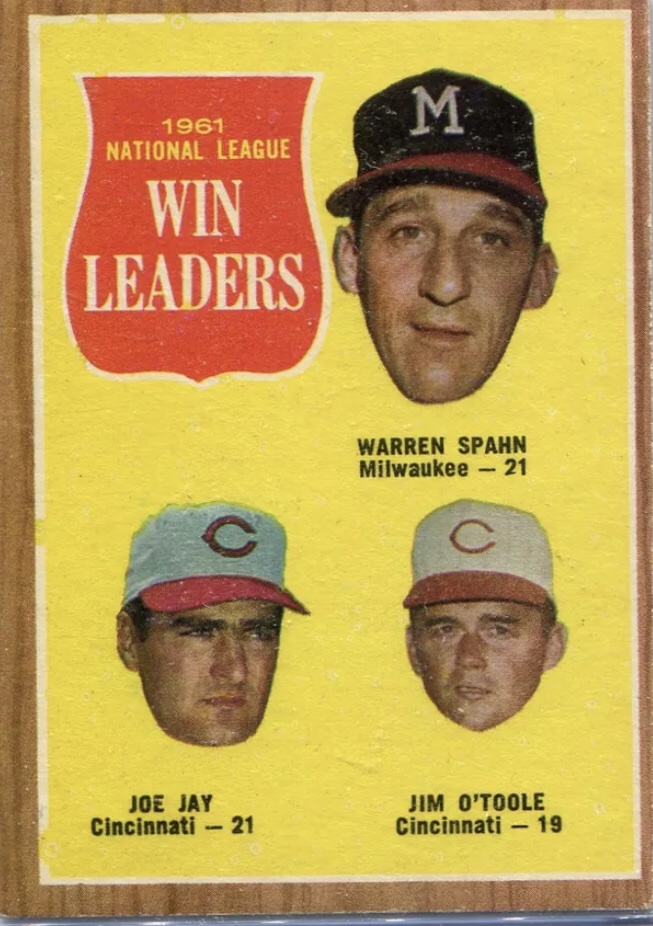
Warren Edward Spahn (Born in Buffalo, NY on April 23, 1921 – November 24, 2003) was an American professional baseball player. He played in Major League Baseball as a left-handed pitcher in 1942 and then from 1946 until 1965, most notably for the Boston Braves, who became the Milwaukee Braves after the team moved west before the 1953 season. His baseball career was interrupted by his military service in the United States Army during the Second World War. Born and raised in Buffalo, New York, Spahn attended South Park High School. With 363 victories over the span of his 21-year baseball playing career, Spahn holds the major league record for most career wins by a left-handed pitcher, and the most by a pitcher who played his entire career in the post-1920 live-ball era.[3] He was a 17-time All-Star player who won 20 games or more in 13 seasons, including a 23–7 record when he was age 42. Spahn won the 1957 Cy Young Award and was a three-time runner-up during the period when only one award was given for both leagues. At the time of his retirement in 1965, Spahn held the Major League Baseball record for career strikeouts by a left-handed pitcher. He was elected to the Baseball Hall of Fame in his first year of eligibility in 1973 with 82.89% of the vote. The Warren Spahn Award, given annually to the major leagues’ best left-handed pitcher, is named in his honor. Regarded as a “thinking man’s” pitcher who liked to outwit batters, Spahn once described his approach on the mound: “Hitting is timing. Pitching is upsetting timing.” Spahn’s major league career began in 1942 with the Braves and he spent all but one year with that franchise, first in Boston and then in Milwaukee. He finished his career in 1965 with the New York Mets and the San Francisco Giants. With 363 wins, Spahn is the sixth most winning pitcher in history, trailing only Cy Young (511), Walter Johnson (417), Grover Cleveland Alexander (373), Christy Mathewson (373), and Pud Galvin (364) on MLB’s all-time list. He led the league in wins eight times (1949–50, 1953, 1957–1961, each season with 20+ wins) and won at least 20 games an additional five times (1947, 1951, 1954, 1956, 1963). Spahn also threw two no-hitters (in 1960 and 1961, at ages 39 and 40), won 3 ERA titles (1947, 1953, and 1961), and four strikeout crowns (1949–1952). He appeared in 14 All-Star Games, the most of any pitcher in the 20th century. He won the NL Player of the Month Award in August 1960 (6–0, 2.30 ERA, 32 SO) and August 1961 (6–0, 1.00 ERA, 26 SO). Spahn acquired the nickname “Hooks”, not so much because of his pitching, but due to the prominent shape of his nose. He had once been hit in the face by a thrown ball that he was not expecting, and his broken nose settled into a hook-like shape. In Spahn’s final season, during his stint with the Mets, Yogi Berra came out of retirement briefly and caught 4 games, one of them with Spahn pitching. Yogi later told reporters, “I don’t think we’re the oldest battery, but we’re certainly the ugliest.” Spahn was known for a very high leg kick in his delivery, as was his later Giants teammate Juan Marichal. Photo sequences show that this high kick served a specific purpose. As a left-hander, Spahn was able not only to watch any runner on first base, but also to avoid telegraphing whether he was delivering to the plate or to first base, thereby forcing the runner to stay close to the bag. As his fastball waned, Spahn adapted, and relied more on location, changing speeds and a good screwball. He led or shared the lead in the NL in wins in 1957–1961 (age 36–40). Spahn was also a good hitter, hitting at least one home run in 17 straight seasons, and finishing with an NL career record for pitchers, with 35 home runs. Wes Ferrell, who spent most of his time in the American League, holds the overall record for pitchers, with 37. Spahn posted a .194 batting average (363-for-1872) with 141 runs, 57 doubles, 6 triples, 94 bases on balls and 189 RBI. He also drove in 10 or more runs nine times, with a career-high 18 in 1951. In 1958 he batted a strong .333 (36-for-108). In eight World Series games, he batted .200 (4-for-20) with 4 RBI and 1 walk.
Joseph Richard Jay (born in Middletown, CT on August 15, 1935) is an American former professional baseballstarting pitcher, who played in Major League Baseball (MLB) from 1953 through 1966, Jay played for the Milwaukee / Atlanta Braves(1953–1955, 1957–1960, 1966), and Cincinnati Reds (1961–1966). He was a switch-hitter and threw right-handed. In addition to being the first Little League player to advance to the major leagues, Jay was one of the first “bonus baby” players in the major leagues. This resulted when he signed a significant contract ($20,000) with the Braves, which forced the Braves to keep Jay on their major league roster for two seasons because of the contract’s amount. On September 20, 1953, at the age of 17, making his first career start (having pitched only one game in relief previous), he pitched a seven-inning complete game shutout (the game was shortened due to rain), but generally was unremarkable in his two years with the team. Following the end of his two years, he was sent to the minors to gain experience on a staff that already was loaded with Hall of Famer Warren Spahn, Bob Buhl and Lew Burdette. Jay went 7–5 with an ERA of 2.14 in 18 games for the Braves in his best season (1958), becoming the first pitcher (fourth player overall) to win the NL Player of the Month awardin July (going 5-2 in 7 starts, posting an ERA of 1.39, and earning 46 SO in 58.1 IP) but a broken finger kept him out of the World Series. The Braves traded Jay to the Cincinnati Redsafter the 1960 season for infielder Roy McMillan. Braves General Manager at the time, John McHale, reportedly made the deal based on the feeling Carl Willey could do a better job for Milwaukee than Jay. Jay took full advantage of the trade, as he became a key figure in the Reds’ stunning revival in 1961. Jay won 21 games (the first pitcher to win 20 since Ewell Blackwell in 1947), tied for the league lead in wins and shutouts, and won his second NL Player of the Month award in May (winning all six starts including a 4 May one-hitter against the Phillies, a 2.72 ERA, and 38 SO in 51.2 IP) as the Reds surged to their first National League pennant since 1940. However, the Reds faced a powerful New York Yankees club which won 109 games and featured Roger Maris, Mickey Mantle and Whitey Ford, as the Reds lost in five games. However, the lone Reds win occurred in Game 2, a 6-2 victory as Jay threw a complete-game four-hitter at Yankee Stadium, being Jay’s single-game career highlight. On May 1, 1962, at the Polo Grounds, off New York Mets pitcher Sherman Jones, Jay hit a three-run HR (base runners were Wally Post and Leo Cárdenas), in the 6th inning, for his first MLB home run. At Crosley Field, on May 28, 1962, Jay hit his only other career home run, off Houston Colt .45s pitcher Bobby Tiefenauer, in the 5th inning, a two-run blast (Don Zimmer was on base). Jay also won 21 games in 1962 as the Reds won 98 games to finish in third-place behind the Giants and Dodgers. Jay’s heavy workload in 1961 and 1962 took a toll the following year where he struggled to a 7–18 record. Jay posted an (11-11) mark in 1964 as the Reds finished a single game behind the eventual World Series champion St. Louis Cardinals.
James Jerome O’Toole (Born in Chicago, IL on January 10, 1937 – December 26, 2015) was an American professional baseball pitcher. He played in Major League Baseball (MLB) for the Cincinnati Reds and Chicago White Sox during his 10-year career. From 1961–64, he won 19, 16, 17 and 17 games for the Cincinnati Reds, from 1961 to 1963 respectively 3rd, tied for 8th, and tied for 10th in the National League. He played a crucial role in Cincinnati’s 1961 National League championship, when he won 19 of 28 decisions, with an earned run average of 3.10, second in the National League behind Warren Spahn. He was named Player of the Month for September with a 5–0 record, 2.53 ERA, and 37 strikeouts. He finished 10th in MVP voting. Though pitching effectively in the 1961 World Series, with an earned run average of 3.00, O’Toole lost his two decisions to Whitey Ford in games 1 and 4, as the New York Yankeesbested the Reds in five games. In 1963, he was the starting pitcher of the National League in the Major League Baseball All-Star Game (his only appearance at the Summer Classic), pitching 2 innings and allowing 1 earned run, not involved in the decision. O’Toole later said that being selected as the starting pitcher by San Francisco Giants manager Alvin Dark was one of the proudest moments of his career. In 1964, he continued as an elite pitcher, with a career-best earned run average of 2.66, 6th in the National League, and a win-lost percentage of .708, third in the National League behind Sandy Koufax and Juan Marichal, two members of the National Baseball Hall of Fame and Museum. O’Toole played in Cincinnati until his final season, 1967, spent with his hometown team, the Chicago White Sox, but was ineffective due to arm troubles. O’Toole tried to return with a 1969 expansion team, the Seattle Pilots, but was cut in spring training before the season began.











 High Quality Baseball Cards