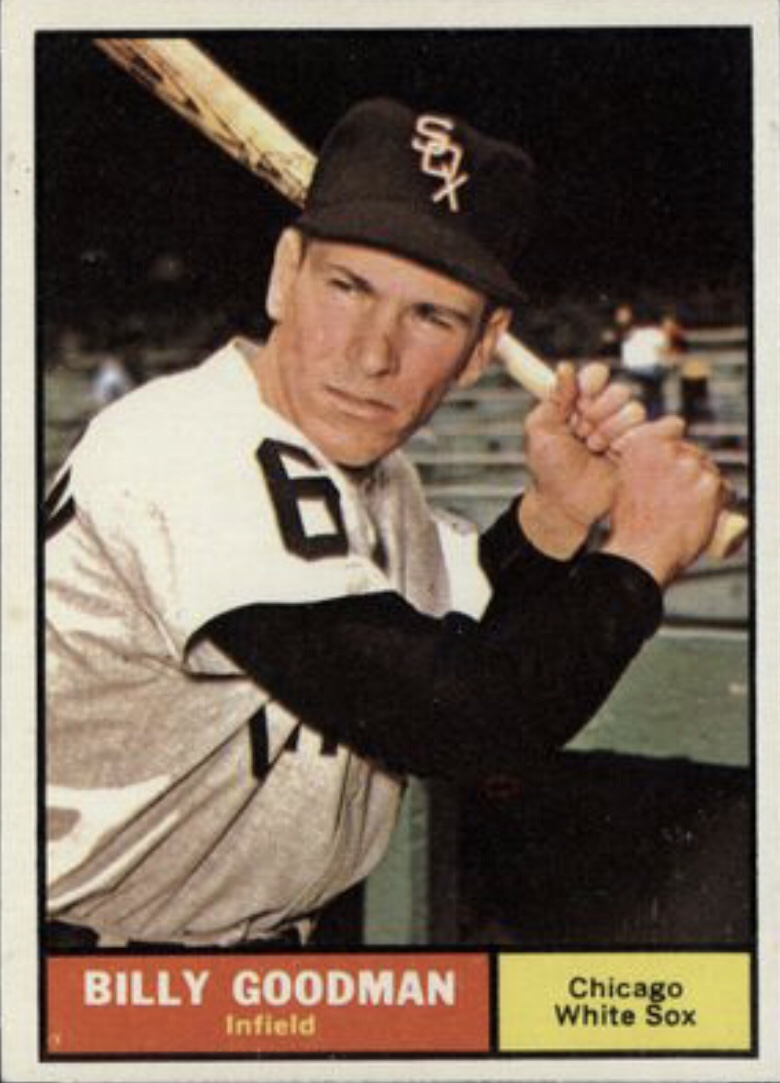
William Dale “Billy” Goodman (Born in Concord, NC on March 22, 1926 – October 1, 1984) was instrumental in Hall of Famer Lary Doby’s decision to play professional baseball as he and Mickey Vernon coerced the young centerfielder while the three were serving together in the United States Navy during World War II in 1945. Billy began playing professionally with the Atlanta Crackers of the Southern Association before the Boston Red Sox purchased his contract in 1947. Goodman played 11 seasons with the Red Sox (1947-1957) and despite showing virtually no home run power, he hit .290 or better in each season from 1948 to 1958, the last two seasons as a member of the Baltimore Orioles (1957) and Chicago White Sox (1958-1961). In 1950, however, Billy led the American League in hitting with a .354 average, one year after becoming an AL All-Star for the first of two appearances. New York Yankees second baseman Phil Rizzuto collected 50 more hits and stole ten more bases than Goodman in 1950, despite hitting 30 points lower as he won the AL Most Valuable Player award with Goodman finishing second. His play in the field and ability at the plate helped the Chicago White Sox win the American League pennant in 1959 for the first time since 1919. Billy retired as a member of the 1962 Houston Colt .45s having amassed 1,691 hits, 807 runs and 591 RBI while batting .300 for his 16-year career. In the field, also posted a .978 fielding percentage.
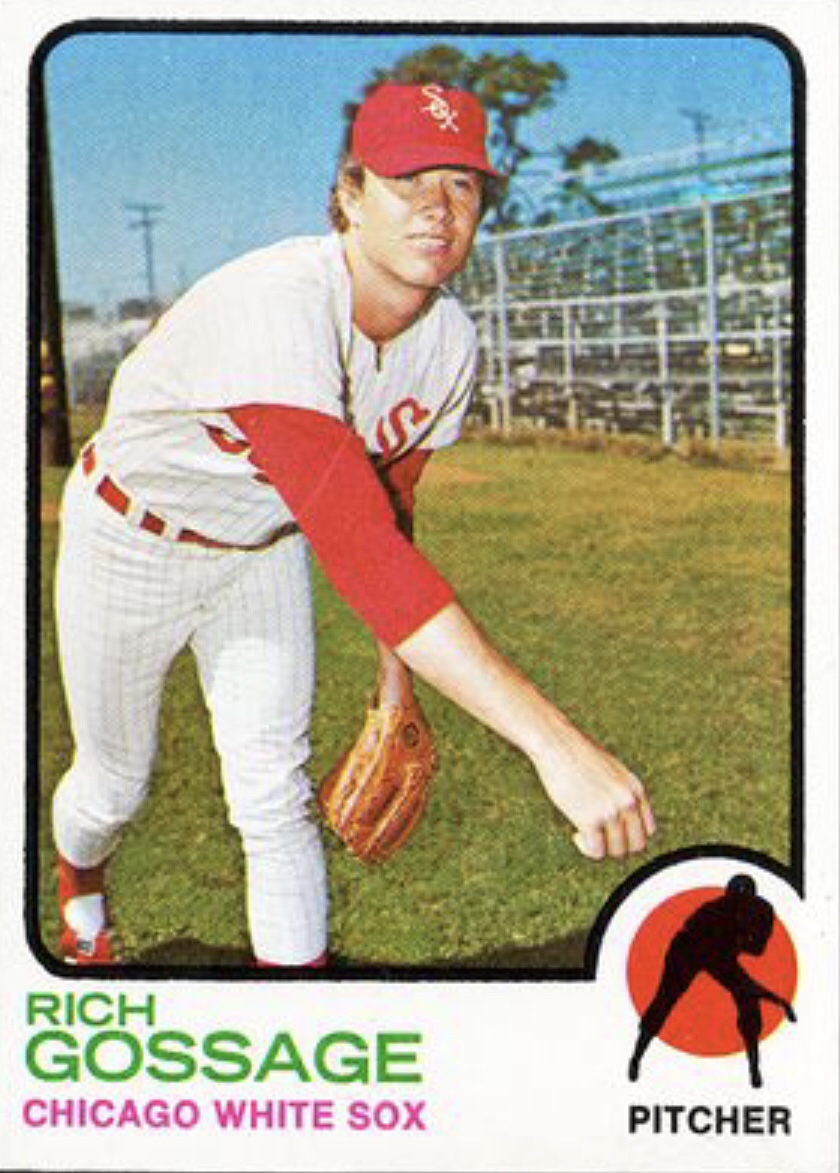
Richard Michael “Goose” Gossage (Born in Colorado Springs, CO on July 5, 1951-) was the rare, Cy Young candidate as a reliever, finishing in the top ten in voting five times including 4 times in the top five. Goose was a big, strong, menacing hurler on the mound with a terrifying look and blazing fastball that would intimidate even the greatest of hitters. His intensity and competitiveness made him one of the most feared relievers in the big leagues and earned him nine All-Star selections in both leagues with four different teams. The well-travelers Gossage spent time with nine different teams but found much of his success with the New York Yankees (1978-1983, 1989) and the San Diego Padres (1984-1987). From 1975-1986, Gossage saved move than 20 games twelve times and lead the American League three times in saves. Goose was a member of three pennant winners with the Yankees in 1978 and 1981 and the Padres in 1984, saving 8 contests and winning the 1978 World Series with the Yankees. Goose Gossage retired with a record of 124-107 adding 1,502 strikeouts with 310 saves while posting a 3.01 career ERA. Richard Michael “Goose” Gossage was elected to the National Baseball Hall of Fame in 2008. During the 1950s and 1960s, Topps was known for producing trading card sets that possessed fantastic eye appeal. In fact, in 1972 the manufacturer produced another set that has captivated collectors to this day based on the colorful design alone. The very next year, for some reason, Topps decided to go with a bland look, one that doesn’t exactly stop hobbyists in their tracks. What the issue may have lacked in aesthetic beauty, however, it made up for in difficultly. The quality of the paper and print, poor centering, and the black borders on the reverse can make high-grade examples hard to come by relative to the period. Gossage’s debut (#174) and Schmidt’s first Topps card are the two Hall of Famer rookies in the set. Unlike Schmidt, Gossage had the spotlight all to himself, which was a rarity during the period as many newcomers had to share their rookie cards with fellow prospects. A Canadian version (O-Pee-Chee) of the same card also exists. While it is tougher to find overall, the Topps rookie is the one that gets most of the attention from collectors.
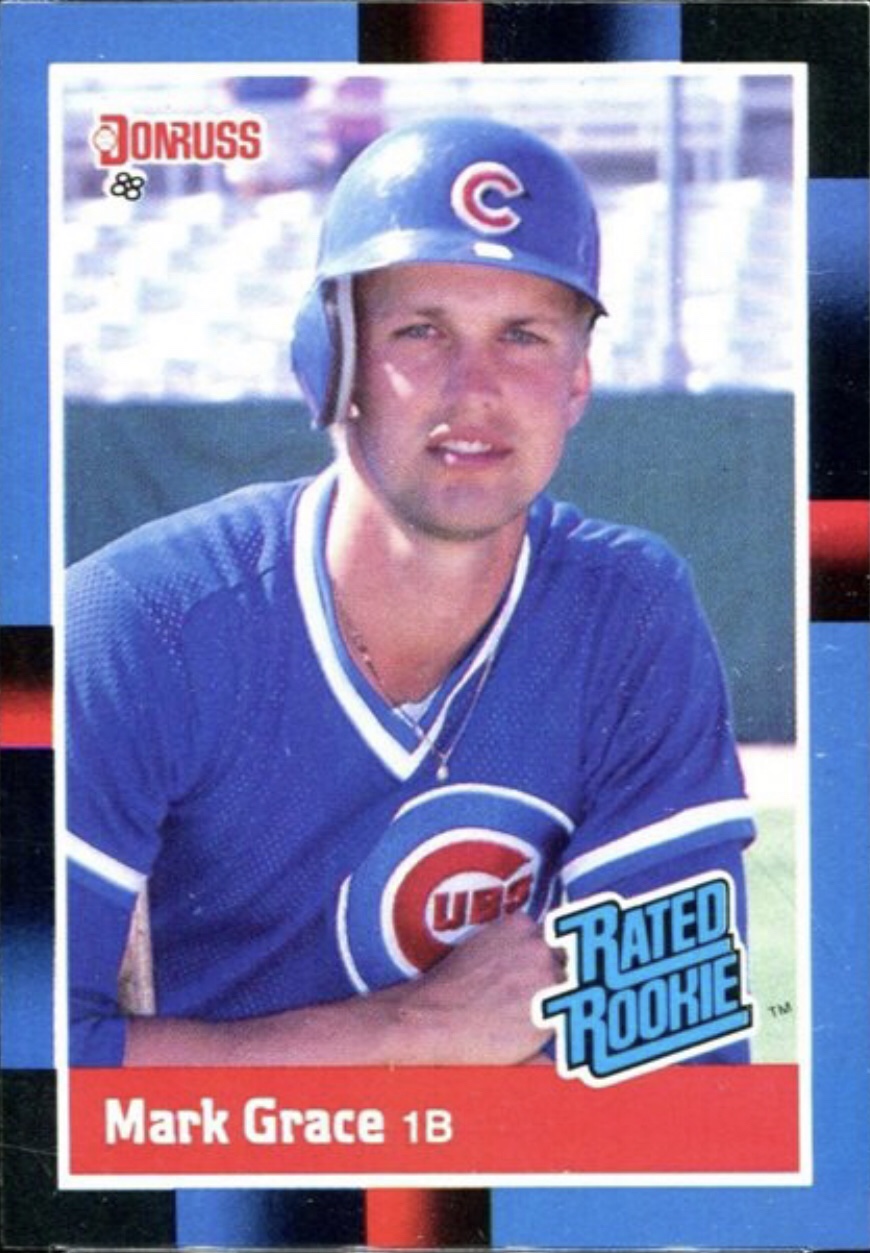
Mark Eugene Grace (born in Winston-Salem, NC on June 28, 1964) is a former Major League Baseball (MLB) first basemanwho spent 16 seasons with the Chicago Cubs and Arizona Diamondbacks of the National League (NL). He was a member of the 2001 World Series champion Diamondbacks that beat the New York Yankees. Grace batted and threw left-handed; he wore jersey number 28 and 17 during his rookie season of 1988, and he kept number 17 for the remainder of his career. Grace starred on Cubs teams that included Ryne Sandberg, Andre Dawson, Shawon Dunston and Sammy Sosa and was a consistent, steady hitter, compiling almost 2,500 hits and more than 500 doubles during his 16-year career and for a few years batted clean-up for the Cubs. He had a career on-base percentage of .383 and collected four Gold Glove Awards and was a three-time All-Star (1993, 1995, 1997). He holds the distinction of having the most hits and doubles of any player in the 1990s. Grace helped lead the Cubs to the NL East division title in 1989 and the NL wild card in 1998. In the 1989 NLCS, Grace batted .647 in the five-game contest with a home run and three doubles, while driving in 8 of the total 16 runs scored by the Cubs in the series. Grace led the team in average (.325), OBP (.393), hits (193), walks (71), doubles (39), and RBI (98 – a career high) in 1993 and was selected as an alternate to the NL All-Star team for the first time in his career. He also hit for the cycle on May 9 that year,[2] and (as of the end of the 2018 season) is the most recent Cub to have done so. In 1995, Grace hit .326 with a .395 OBP and a .516 SLG, and hit 51 doubles (which led the NL). He was once again named to the NL All-Star team. Grace collected the most hits (1,754) and doubles (364) of any player in the 1990s [1]. Grace and Pete Rose are the only Major League Baseball players to lead a decade in hits and not be in the Baseball Hall of Fame. Grace also had the most sacrifice flies in the 1990s with 73. The song that played most frequently on the Wrigley Field organ prior to a Grace at bat was “Taking Care of Business”, which Grace explained was due to his bit part in a Jim Belushi film of the same name.
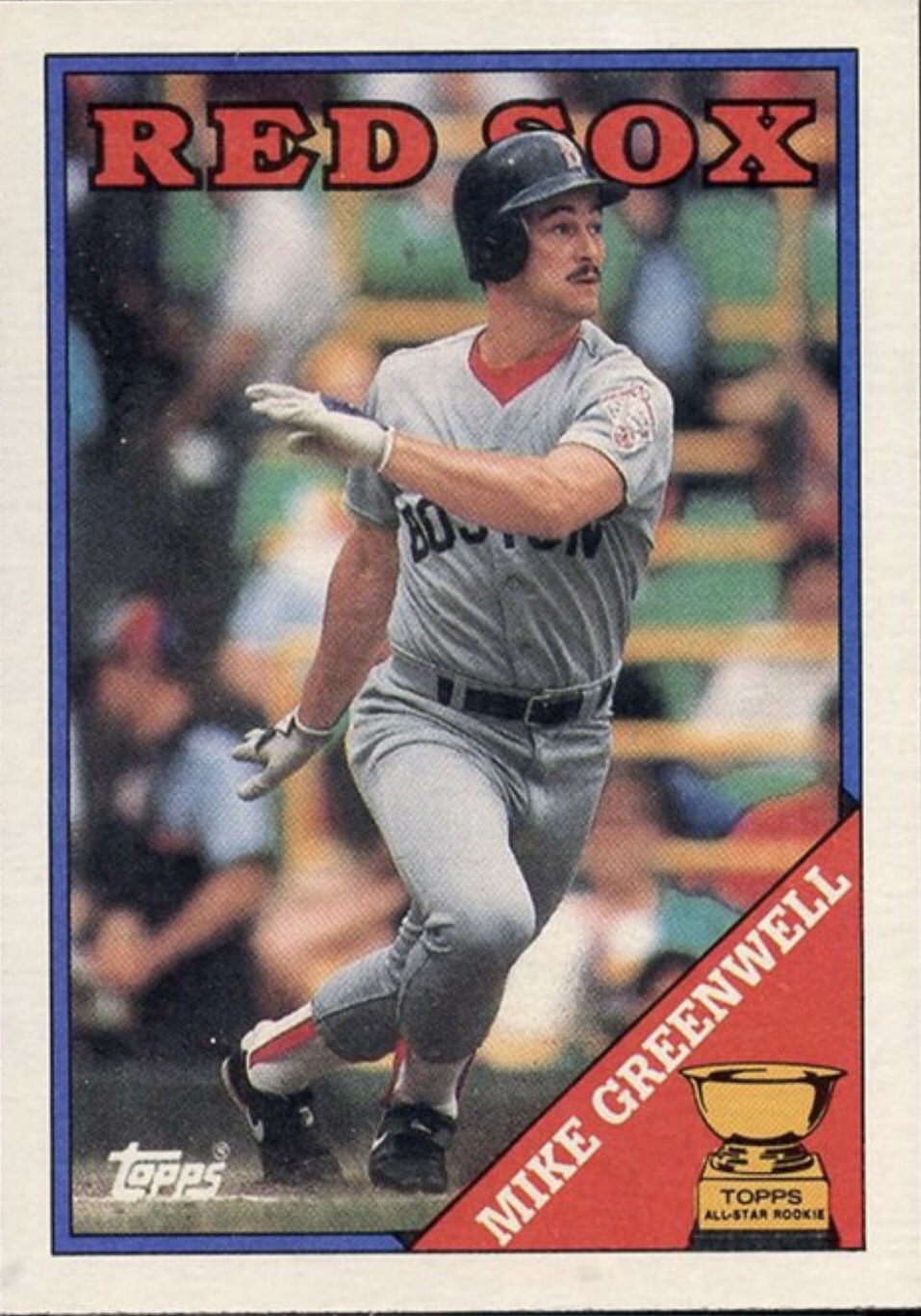
Michael Lewis Greenwell (born in Louisville, KY on July 18, 1963) is a former left fielder in Major League Baseball (MLB) who played his entire MLB career with the Boston Red Sox (1985–1996). He played a few games for the Hanshin Tigers in Japan (1997), before retiring. Greenwell was nicknamed “The Gator.” He batted left-handed and threw right-handed. He was fourth in Rookie of the Year voting in 1987. Greenwell was a leading contender for the American League MVP award in 1988, but lost to Jose Canseco, who had the first 40 home run, 40 stolen base season in baseball history. Greenwell hit .325 with 22 home runs and 119 RBIs in 1988, setting career highs in all three categories.
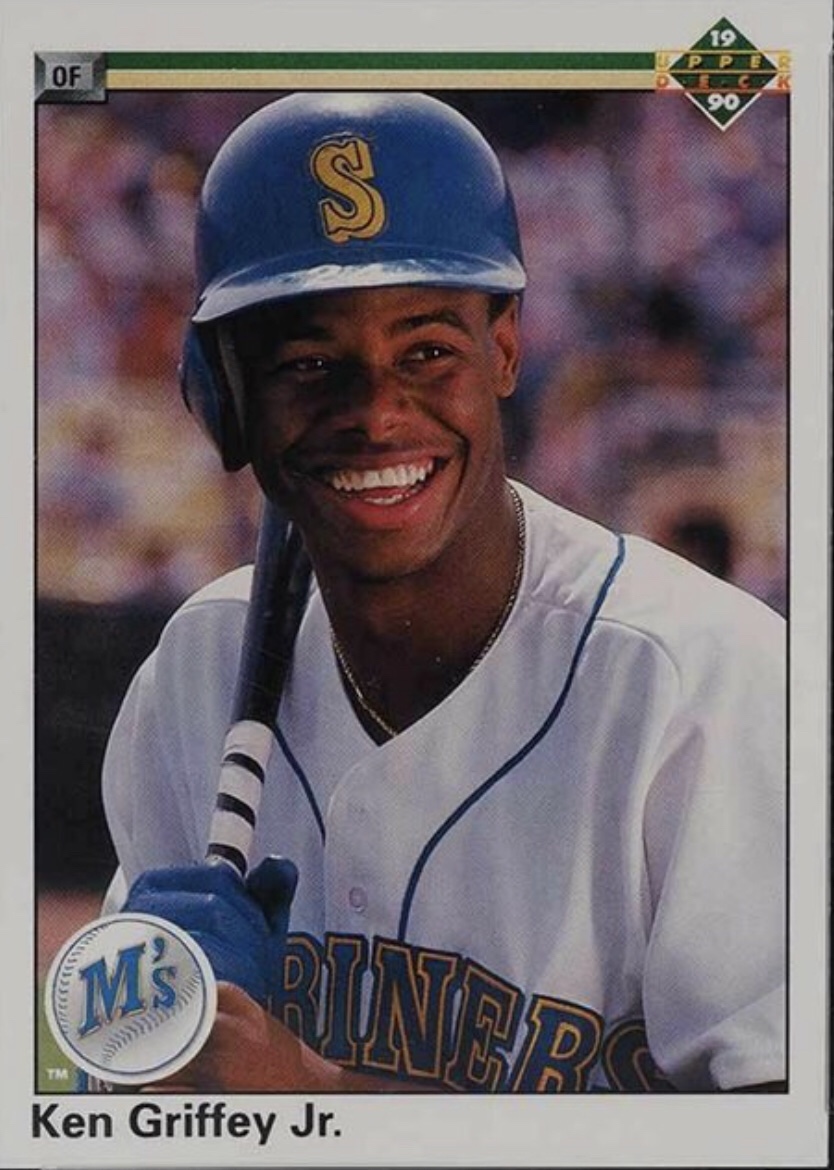
Ken Griffey, Jr., in full George Kenneth Griffey, Jr., (born in Donora, PA on November 21, 1969), American professional baseball player who was one of the iconic athletes of the 1990s and ranked among the best power hitters and defensive outfielders of all time. In 1987 Griffey was the first player selected by the Major League Baseball draft and was signed by the American League Seattle Mariners. He made his major league debut in 1989. His father, outfielder Ken Griffey, Sr., was playing for the Cincinnati Reds in that year, and the Griffeys thus became the first father and son ever to play in the major leagues at the same time. Griffey, Sr., arranged to be traded to the Mariners late in the 1989 season, and the two formed a sentimental duo in the lineup until his retirement in 1991. Griffey, Jr., soon began to prove his worth as both a centre fielder and a hitter. He was injured in his rookie season, but in 1990 he won his first Gold Glove Award, had a batting average of .300, and played in the All-Star Game. He went on to win the American League Gold Glove Award for the years 1991–99 with his spectacular fielding. In 1997, when Griffey hit 56 home runs and batted in 147 runs, he was a unanimous selection for the American League’s Most Valuable Player award. At the close of the 1999 season, Griffey—who had come to dislike playing in the Mariners’ new pitcher-friendly stadium and wanted to work closer to his family’s home in Orlando, Florida—requested a trade from Seattle. In February 2000 he was traded to Cincinnati, which he considered his hometown and where his father worked as a coach. Griffey struggled with a series of injuries in Cincinnati. When he was on the field, he remained a dangerous left-handed hitter. In 2004 he became the 20th major league player to hit 500 home runs, and he was named to the National League All-Star team in 2000, 2004, and 2007. In 2008, after hitting his 600th career home run, Griffey joined Barry Bonds, Hank Aaron, Babe Ruth, Willie Mays, and Sammy Sosa as the only players in major league history to accomplish that feat. Griffey was traded to the Chicago White Sox in July 2008. He became a free agent for the first time in his career at the end of the 2008 season, and he signed with the Mariners again in February 2009. Griffey’s return to Seattle was a boon for the Mariners’ attendance figures, but his deteriorating on-field play and subsequent lack of playing time led him to abruptly retire from baseball in June 2010. He finished his career with a .284 batting average, 630 home runs, and 1,836 runs batted in. In 2016 he was inducted into the Baseball Hall of Fame, having received 437 of the 440 votes cast (99.32 percent) to set the record for the highest percentage of votes in the history of the Hall of Fame (which was broken in 2019 when Mariano Rivera was elected unanimously). In 2021 he joined the Mariners’ ownership group.
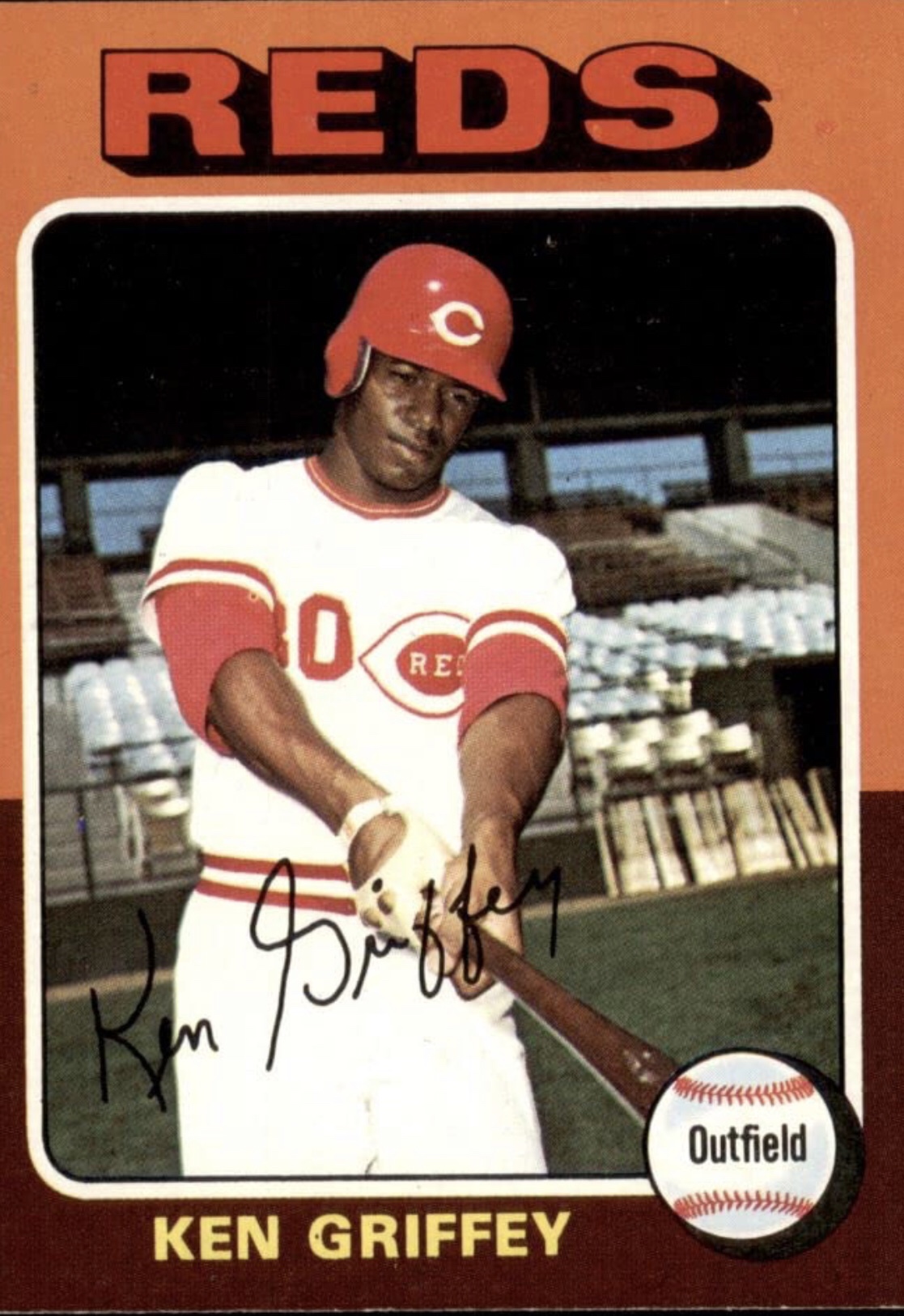
George Kenneth Griffey Sr. (born in Donora, PA on April 10, 1950) is an American former professional baseball player and coach. He played in Major League Baseball (MLB) as an outfielder from 1973 through 1991, most notably as a member of the Cincinnati Reds dynasty that won three division titles and two World Series championships between 1973 and 1976. He also played for the New York Yankees, Atlanta Braves and the Seattle Mariners. Griffey made his MLB debut on August 25, 1973, with the Cincinnati Reds. That season, Griffey played in only 25 games, but batted .384 with three homers. The following season, Griffey saw more playing time with 88 games. In 1975, Griffey began to break out with a .305 batting average with four home runs and 46 RBIs. Griffey’s best season came in 1976, when he came just short of winning the batting title behind Bill Madlock of the Chicago Cubs. Griffey chose to sit out the final day of the season to protect his batting title and it came back to haunt him as Madlock collected four hits that same day. Griffey entered the game late after hearing the news, and went 0 for 2. Many baseball purists were disappointed in Griffey (and perhaps more so in his manager, Sparky Anderson, for choosing to sit him out to gain an individual accolade). Griffey finished with a career high .336. He also finished eighth in the Most Valuable Playervoting, and was named to The Sporting News National League All-Star team. The Reds would win their second consecutive World Series title in 1976, but that year also marked the beginning of the end of their “Big Red Machine” phase. In the next four seasons, Griffey batted .318, .288, .316, and .294 with a total of 43 home runs. In Griffey’s final season of his first stint with the Reds, the strike-shortened 1981 campaign, he batted .311 with only two home runs and 34 RBIs.
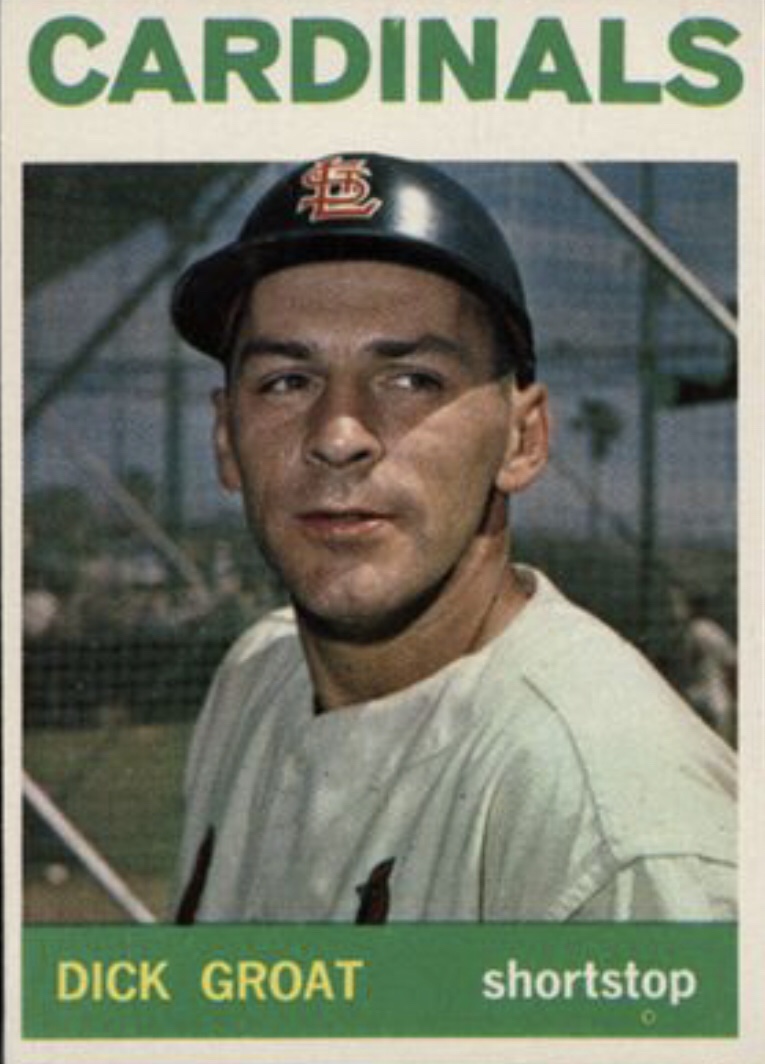
Richard Morrow “Dick” Groat (Born in Wilkinson, PA on November 4, 1930-) was a two-time All-American in basketball from Duke University, was voted the 1951 Helms Foundation College Basketball Player of the Year and is the first person to be inducted into the college basketball and college baseball halls of fame. Dick played the 1952-53 season with the Fort Wayne Pistons, scoring 309 points on 109 free throws and 100 field goals while pulling down 86 rebounds in 26 games. Despite his success on the hardcourts, Groat joined the Pittsburgh Pirates in 1952 at shortstop next to Hall of Famer Bill Mazeroski creating one of the greatest double play tandems in Major League history. Dick played shortstop for 14 years in the Majors with the Pirates (1952, 1955-1962), the St. Louis Cardinals (1963-1965), the Philadelphia Phillies (1966-1967) and the San Francisco Giants (1967). In 1960, Groat led the National League in batting average (.325), earning the NL Most Valuable Player Award while leading the Pirates to the 1960 World Series title over the heavily favored New York Yankees. Dick also won the 1964 World Series title with the Cardinals, again over the Yankees, and earned five NL All-Star Game selections. Over his 14 seasons, he posted a .961 career fielding percentage with 1,237 double plays. Dick Groat ended his career with a .286 career batting average with 2,138 hits including 352 doubles, 829 runs and 707 RBI in 1,929 games.
Pedro Guerrero (born in San Pedro de Macoris, DR on June 29, 1956) is a Dominican former professional baseball player. He played all or part of fifteen seasons in Major League Baseball from 1978 to 1992 with the Los Angeles Dodgers and St. Louis Cardinals. At age 17, Guerrero began his career with a season of rookie ball in the remote Gulf Coast League. In April 1974, the Indians, seeking pitching help, traded Guerrero to the Los Angeles Dodgers for minor leaguer left-handed pitcher Bruce Ellingsen. Dodgers personnel director Al Campanis had recently hired Reggie Otero, who then recommended the acquisition of Guerrero. Ellingsen pitched only 16 major league games; contrasted with Guerrero’s all-star career, the trade ranks as one of the most lop-sided straight-up swaps in baseball history. Guerrero would wait several years before breaking in with the parent club and becoming a full-time big league player. Los Angeles won three pennants between 1974 and 1978, receiving a steady supply of pitching talent from Triple-A Albuquerque and gaining even more assets through trades and the free agency. Meanwhile, Guerrero shined in the minors. He hit .300 or better in six seasons and being named to minor league All-Star teams at both first and third base. In 1977, he was leading the Pacific Coast League at AAA Albuquerque with a .403 batting average, when he fractured his left ankle in the field. The injury cost him a call-up to the majors. Guerrero finally broke into the big leagues in late 1978. His first major league at-bat came in the fifth inning of a September blowout loss against Randy Jones and the San Diego Padres. Pedro pinch-hit for former minor-league roommate and future nemesis Rick Sutcliffe, and singled for the first of his 1,618 hits. Exactly one year later he hit his first major league home run off Padres pitcher Bob Owchinko, appearing in 25 games total in 1979. Pedro made significant contributions to the parent club in 1980. He filled valuable a utility role over two stretches during the season, spelling an ailing Davey Lopes at second and a slumping Rudy Law in center. Overall, Guerrero played six different positions in 1980 and batted an impressive .322 with 7 homers and 31 RBI in 183 at-bats. At the start of the 1981 season, incumbent right fielder Reggie Smith was rehabilitating from an arm injury, which opened a spot in right field for Guerrero. The first half of the season was going well, with a batting average of .325 and the Dodgers atop their division, when a players’ strike halted the season in early June. After the season resumed in August, Guerrero won the first of five All-Star nods. Guerrero batted only .269 in the second half of the split campaign as the Dodgers posted a mediocre 27–26 record the rest of the way, but the Dodgers were guaranteed a playoff spot for their first-half lead. Guerrero’s slump continued into the postseason. The Dodgers were pushed to the brink in two consecutive playoff rounds against Houston and Montreal, but managed to overcome deficits in each series. The Dodgers again faced the New York Yankees in the 1981 World Series, their third Fall Classic matchup in five years. Guerrero factored into three straight wins in Games 3–5, but his crowning performance in Game 6 sealed the series for the Dodgers. In that final game, Pedro totaled five RBIs and eight total bases amassed on a triple, homer, and bases loaded single. The one-man show capped a 9–2 victory and gave the Dodgers’ their first World Series title in 16 years. Guerrero was named co-MVP of the Series along with teammates Ron Cey and Steve Yeager. In 1982, Guerrero won a Silver Slugger Award for his offensive performance as an outfielder. He also became the first Dodger to hit 30 home runs and steal 20 bases in a season, and he did it again the following year. In 1985, Guerrero tied a major league record with 15 home runs in June, and also tied the Los Angeles season record of 33. He reached base 14 consecutive times that year, two short of the record set by Ted Williams, and led the league in slugging, on-base and home run percentage. Guerrero was an aggressive base runner but a poor slider. He ruptured a tendon sliding in spring training and missed most of the 1986 season, after which he ran less frequently. But in 1987 he batted .338 and won the UPI’s Comeback Player of the Year award. His batting average that year was the highest by any Dodger since the .346 recorded by Tommy Davis in 1962. The Dodgers shifted him from the outfield to a starter at third base as a replacement for the departing Ron Cey. He also played sporadically at first base as the need arose. Although he gained a reputation for being shaky at third, he was statistically as good as anyone in the league at getting to the ball.
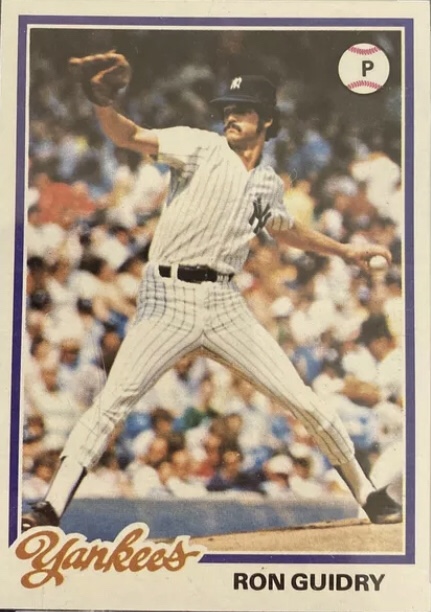
Ronald Ames Guidry (born in Lafayette, LA on August 28, 1950), nicknamed “Louisiana Lightning” and “Gator”, is an American former professional baseball pitcher who played 14 seasons in Major League Baseball (MLB) for the New York Yankees. Guidry was also the pitching coach of the Yankees from 2006 to 2007. Guidry was selected in the third round (67th overall) by the New York Yankees in the 1971 MLB draft. After four seasons in the minor leagues, he pitched briefly in the major leagues in the 1975 and 1976 seasons. He was nearly sent to the Baltimore Orioles as part of a trade deadline deal on June 15, 1976, but the Yankees did not want to give up any more left-handed pitchers beyond the three (Scott McGregor, Tippy Martinez and Rudy May) that they had already included in the deal. The following year he was to have been dealt to Toronto for Bill Singer in a transaction that was approved by the Yankees but was vetoed by Blue Jays president Peter Bavasi. In 1977, Guidry began the season as a relief pitcherbut was moved into the Yankees’ starting rotation. On April 30, he was called on to make an emergency start in replace of Mike Torrez, recently acquired in a trade from the Athletics, who had not joined the team in time for what was supposed to be his first start. In the longest outing Guidry could remember since his Eastern League days of 1974, he helped the Yankees beat the Seattle Mariners 3–0. Guidry finished the season with a 16–7 record. His emergence as a starter after his previous seasons in the bullpen made him one of the Yankees’ biggest surprises in 1977. He helped lead the Yankees to a World Series championship. In 1978, Guidry posted a career year that has been described as the all-time best season by a Yankees pitcher. Against the California Angels on June 17, he struck out a Yankee-record 18 batters. Guidry’s 18-strikeout performance is usually cited as the launching pad of the Yankee Stadium tradition of fans standing and clapping for a strikeout with two strikes on the opposing batter. For the season, Guidry went 25–3, setting the all-time mark for winning percentage by a pitcher with at least twenty wins. He led the league with a 1.74 ERA, an .893 winning percentage, nine shutouts, and 248 strikeouts. Guidry’s success during 1978 was due in large part to his mastery of the slider. His 248 strikeouts set a Yankees’ team record for most strikeouts notched by a pitcher in a single season.Guidry’s 25th win of the 1978 regular season was his most significant, as it came in the Yankees’ 5–4 win over the Boston Red Sox in a one-game playoff at Fenway Park in Boston to determine the American League East division winner. The game is best known for Bucky Dent’s seventh-inning, three-run home run that gave the Yankees a 3–2 lead. Later that month, the Yankees again won the World Series over the Los Angeles Dodgers. Guidry won the 1978 American League Cy Young Awardunanimously. He also finished second in the American League Most Valuable Player voting to Boston Red Sox slugger Jim Rice. In addition, Guidry was named The Sporting News AL Pitcher and Major League Player of the Year. Guidry was named to the American League All-Star Team in 1978, 1979, 1982, and 1983. Known as an excellent fielder, Guidry won a Gold Glove each year from 1982 through 1986. In 1984, Guidry won the Roberto Clemente Award, given annually to the Major Leaguer who “‘best exemplifies the game of baseball, sportsmanship, community involvement and the individual’s contribution to his team.” On August 7, 1984, Guidry struck out three batters (Carlton Fisk, Tom Paciorek and Greg Luzinski) on nine pitches in the ninth inning of a 7–0 win over the Chicago White Sox. Guidry became the eighth American League pitcher and the 20th pitcher in major-league history to accomplish an immaculate inning. In 1985, he led the American League with 22 wins. Guidry and Willie Randolph were named co-captains of the Yankees on March 4, 1986.
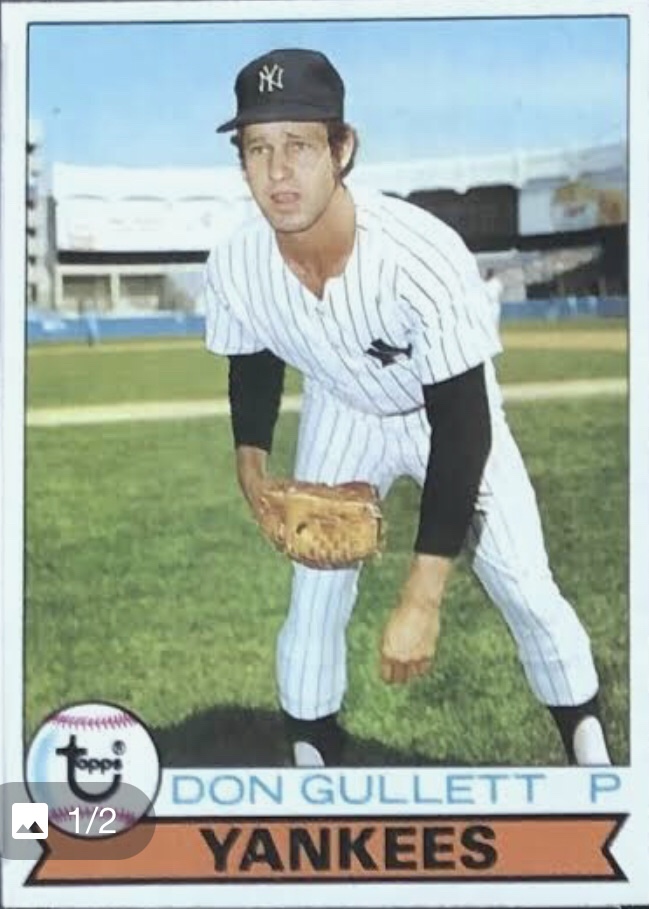
Donald Edward Gullett (born in Lynn, KY on January 6, 1951) is an American former professional baseball player and coach. He played in Major League Baseball as a left-handed pitcher from 1970 through 1978, most notably as a member of the Cincinnati Reds dynasty that won four National League pennants and two World Series championships between 1970 and 1976. Gullett was also a member of the New York Yankees teams that won two consecutive World Series championships in 1977 and 1978. After his playing career, he served as pitching coach for the Cincinnati Reds from 1993 to 2005. In 2002, he was inducted into the Cincinnati Reds Hall of Fame. The Reds selected Gullett in the first round of the 1969 Major League Baseball draft. He pitched for the Sioux Falls Packers of the Northern League that season. In 1970, Gullett was so impressive in spring training, despite his inexperience, he made the big league roster of a team that would go on to win the NL Pennant. Pitching in relief of starter Ray Washburn, Gullett debuted on April 10, 1970, on the road against the San Francisco Giants. Gullett had an outstanding rookie season, appearing in 44 games (42 in relief) posting a 5-2 record and a 2.43 earned run average. In the 1970 World Series against the Baltimore Orioles, Gullett pitched 6+2⁄3 innings and allowed just one earned run (1.35 earned run average) as he and veteran Clay Carroll helped keep an injury-riddled pitching staff competitive in the series. During the 1972 season Gullett suffered from hepatitis. That season turned out to be the only one in which he had a losing record. Gullett was the pitcher when Willie Mays hit the 660th and last home run of his Major League Baseball career on August 17, 1973. Gullett also surrendered Hank Aaron’s 660th home run on August 6, 1972. Gullett played for the Reds through the 1976 season. In November of that year, as a free agent, he signed with the New York Yankees. His fourth start with New York came on a rainy day at Memorial Stadium in Baltimore on April 25. During the fourth inning, Gullett slipped and fell on the wet pitching mound, spraining his ankle and straining a muscle in his neck. The injury required him to wear a neck brace and miss some starts.[10] In his return on May 7, he struck out 10 and threw 154 pitches in a complete game, 11–2 victory over the Oakland Athletics. He enjoyed a 14–4 season with the Yankees in 1977, but shoulder problems in 1978 signaled the end of his career at age 27. During a nine-year career, Gullett accumulated 109 wins and posted a 3.11 earned run average and tallied 921 strikeouts. Playing for only nine seasons, Gullett was a member of six World Series teams (1970, ’72, ’75, ’76, ’77, and ’78), including four consecutive world champions (’75 and ’76 Reds, and ’77 and ’78 Yankees).










 High Quality Baseball Cards